Here's How NASA Decides on Names for Its Spacecraft
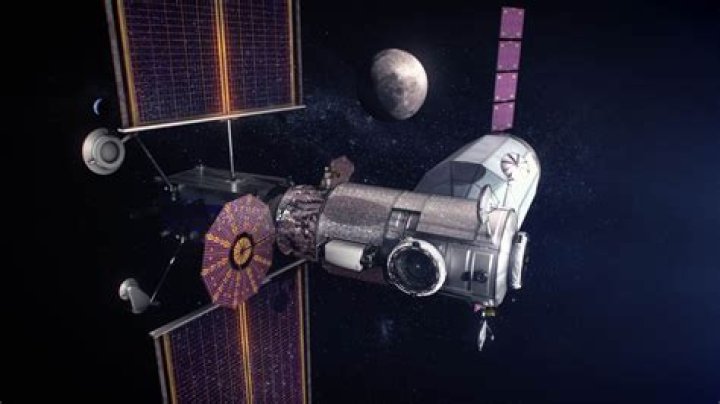
Columbia. Aqua. Glory. These are just some of the many powerful names of NASA's spacecrafts past and present. But how does the government agency actually decide which names will and will not fly? It turns out that while the spacecraft-naming process is regulated by a strict set of guidelines that are almost as old as NASA itself, there's also a bit of creativity involved.
Take Apollo, for instance, which was responsible for the famous Apollo 11 spacecraft that landed on the moon. According to The NASA History Series' "Origin of NASA Names," the name of this mission—and the spacecrafts associated with it—was proposed in 1960 by Abe Silverstein, then the director of space flight development, "because it was the name of a god in ancient Greek mythology with attractive connotations and the precedent for naming manned spaceflight projects for mythological gods and heroes had been set with Mercury." Other spacecrafts in this set include Orion and Juno.
And then there are orbiters like Atlantis, Challenger, Discovery, Endeavour, and Columbia. As NASA notes on its website, these were named after pioneering sea vessels, ones that—like NASA's spacecrafts—were instrumental in exploration and science. According to the agency, "NASA searched through the history books to find ships which achieved historical significance through discoveries about the world's oceans or the Earth itself."
But who actually decides on these spacecraft names? Well, the answer to that question has changed over the years. According to NASA's website, "The first 'naming committee' established within NASA Headquarters was the Ad Hoc Committee to Name Space Projects and Objects." Founded in 1960, the committee's primary raison d'être was to create an established set of rules that NASA officials could use to select names for their missions and spacecrafts.
The committee's instructions: "Each project name will be a simple euphonic word that will not duplicate or be confused with other NASA or non-NASA project titles. When possible and if appropriate, names will be chosen to reflect NASA's mission. Project names will be serialized when appropriate, thus limiting the number of different names in use at any one time; however, serialization will be used only after successful flight or accomplishment has been achieved."
The early 1960s also saw the establishment of the Project Designation Committee, which was responsible for selecting the names of NASA spacecrafts and missions. However, Motherboard notes that in 1963, the committee essentially faded out of existence. It saw an official re-establishment in the '70s, and though it's technically still around today, it isn't responsible for most modern NASA spacecraft names. On February 14, 2000, NASA instituted a new naming policy dictating that project names need to be "simple and easily pronounced," that acronyms should "be avoided … except where the acronym is descriptive and easily pronounced," and that no two missions or spacecrafts will have the same name.
Today, the names for spacecraft and projects are entirely up to the head honcho at any given NASA headquarters. "The Official-in-Charge of the appropriate NASA Headquarters office is responsible for identifying missions that need a name and assembling a committee to recommend names," NASA chief historian Bill Barry explained to Motherboard. "How that committee works is up to the Official in Charge and there really isn't a 'preferred' method [for naming craft]."
So there you have it: When it comes to naming spacecraft, the folks at NASA don't always plan! And if you're intrigued by outer space, check out these 21 Mysteries about Space No One Can Explain.
To discover more amazing secrets about living your best life, click here to follow us on Instagram!
Filed UnderFacts • Fun Facts • ScienceRead This NextHere's Where These Famous Companies Got Their Famous Names
Who knew that "Pepsi" is a reference to indigestion?August 20, 201830 Scary Ocean Facts
Alien life may or may not exist—but the fangtooth definitely does.July 3, 2023Things That Have Different Names Throughout the U.S.
Are those illuminating insects called fireflies or lightning bugs? It all depends on where you live.February 4, 2020This Is Why the Ocean Is Filled with Salt
And why freshwater isn't quite as fresh as you'd thinkNovember 15, 201830 Terrible Original Names for Your Favorite Bands
"Tony Flow and the Miraculously Majestic Masters of Mayhem?"June 20, 2018The Space Mysteries No Scientist Can Explain
The truth is out there, but no one’s found it yet.October 25, 202315 Terrifying Things in the Ocean That Can Sting You
Some of the ocean's most venomous villains are hiding right below the surface.July 15, 201910 Things You Didn't Know about Justin Trudeau
Athlete, nerd, hopeless romantic, thespian. Yes, there’s a lot more to Canada’s Prime Minister than just politics.March 21, 2017Jon Hamm: The Best Life Interview
Jon Hamm, star of TV's Mad Men, reveals the secrets of manliness in a postmodern world.November 15, 2016Driving Tips Smart Men Know
Ten easy ways to be the safest driver on the road. April 3, 2017