A Massive Star Just Exploded, and You Can See It for Yourself—Here's How
Looking up at the night sky is simultaneously calming and overwhelming. It's a clear indicator of just how vast the universe is, while the moon and stars can also provide a comforting constant. But if you're ready to move past the familiar and learn more about the celestial bodies that dominate the night sky, you're in luck: There's currently a massive star explosion that you can see for yourself. Read on to find out how and when astronomers recommend viewing this stunning supernova.
READ THIS NEXT: NASA Says Solar Eruptions Are Increasing—Here's How That Could Affect Us.
The exploding star was first discovered on May 19.
Amateur astronomers rejoice: A new supernova (essentially an exploding, dying star) was discovered in the Pinwheel Galaxy. Also known as M101 or Messier 101, the spiral Pinwheel Galaxy is roughly 21 million light-years away from Earth, according to Scientific American.
The supernova, formally named SN 2023ixf, was first spotted on May 19 by supernova-hunter Koichi Itagaki, who is based in Yagamata, Japan. The existence of the supernova was confirmed by the Zwicky Transient Facility (ZTF) telescopes in California the next evening, Forbes reported.
"It took me about five minutes to confirm that it was a supernova," Itagaki told Scientific American. "The discovery was made in bad weather with lots of clouds. We were lucky."
Scientists are thrilled about this exciting discovery.
The fog rolled in right at the end, but I just managed to catch supernova 2023ixf in M101 with my @Unistellar eVscope2. Here I am blinking tonight's image with one taken June 2022. #supernova #M101 #2023ixf
— Scott Kardel (@palomarskies) May 21, 2023
Interestingly enough, SN 2023ixf is the closest supernova to Earth detected in the past five years, and the second closed in the past 10 years, according to the National Aeronautics and Space Administration (NASA). On May 22, the Hubble Space Telescope announced that it began studying the supernova—and scientists are excited about any "new clues" that may surface.
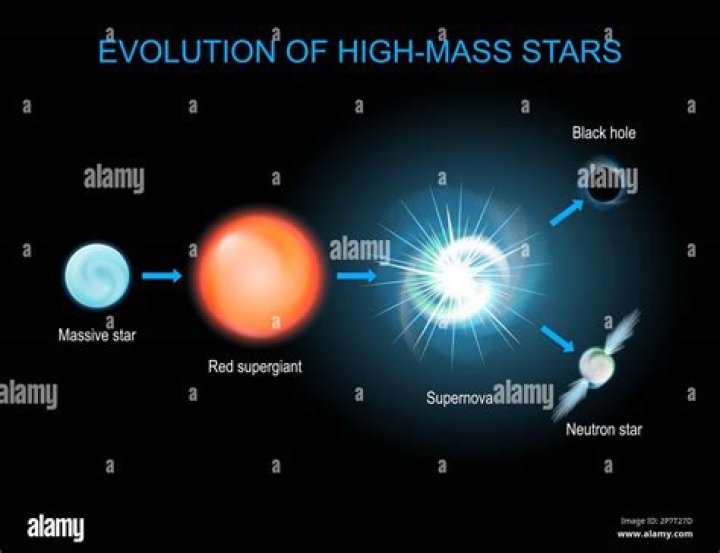
As Scientific American explains, the event is a type II supernova, which occurs when a humungous star "runs out of fuel." In other words, this star—which is many times the size of Earth's sun—couldn't support its own weight and collapsed into either a black hole or a neutron star. According to Space.com, as a result, there's a burst of both light and energy that was first visible from Earth last Friday.
Astronomers stress that SN 2023ixf can help bolster knowledge about supernovas, as it's so "close" to Earth and was discovered before reaching its peak brightness, per Scientific American.
"It's going to probably be potentially the most detailed supernova studied in terms of the rise and then the decay and all the different stages of the supernova itself," Yvette Cendes, PhD, astronomer at the Center for Astrophysics | Harvard & Smithsonian, told Scientific American.
Here's how you can see it for yourself.
If you're interested, Sanjana Curtis, astrophysicist at the University of Chicago, said you can definitely check out the supernova.
"It's a rare glimpse at a very spectacular and dramatic event that's happening—in astronomy terms—nearby, and I don't think people should miss it because it might not happen again for a decade," Curtis told Scientific American. "So if you have a telescope, you want to point it at M101 right now."
According to Scientific American, the Pinwheel Galaxy—and the supernova—are now visible when using a "modest backyard telescope."
The Pinwheel Galaxy is also home to the Big Dipper, in the constellation Ursa Major, which an amateur astronomer can likely spot. To locate the supernova, find the Big Dipper's "handle," which is comprised of two stars, Alioth and Mizar. If you continue the line beyond Mizar, you should be in the "general vicinity" of M101, according to Space.com.
From there, more experienced stargazers might be able to spot the supernova, as it's out-of-place on one of the galaxy's spiral arms.
You can also watch a live stream.
There's no need to panic about setting up your telescope in time, as scientists confirmed that the supernova will be visible for the next few months, per Scientific American.
But if you don't have a telescope, that's not a problem, either. According to Space.com, the Virtual Telescope Project is live-streaming the developing explosion for free on its website and on YouTube. The event begins at 6 p.m. Eastern Daylight Time (EDT) tomorrow, May 25.
Abby Reinhard Abby Reinhard is a Senior Editor at Best Life, covering daily news and keeping readers up to date on the latest style advice, travel destinations, and Hollywood happenings.Read moreFiled UnderNews • ScienceSources referenced in this article- Source:
"Da Vinci Glow" Will Light Up the Moon This Week
Even though it's far from full, our closest neighbor will appear brighter in the sky.May 17, 2023The Full Flower Moon Will Light Up the Sky Tonight
You might want to take the time to check out this special astronomical event.May 4, 20238 Things You Can See Without a Telescope
There are plenty of stars, planets, and other phenomena that are visible without extra equipment.May 5, 2023The Smart Man's Guide to Spotting Counterfeit Wine
That $2,000 bottle of Bourdeaux might be worth $20. Here’s how to be sure it’s the real thing.April 13, 2017The 5 Best Light-Bodied Red Wines for Extending Your Summer
Don't let September ruin a killer party. August 25, 201717 Insanely Cool New Luxury Bicycles for Spring
Meet the bikes that cost more than a car.March 31, 2017Best Life Essentials
You deserve the best. Live life to the fullest with these ultimate essentials.October 21, 2016This Is the Safest Way to Store Meat
Don't let that filet set you up for food poisoning. February 7, 2018Here Are the 10 Wealthiest Cryptocurrency Millionaires Under 40
Including one guy who is only 24 years-old!February 7, 2018This Is the Safest Way to Clean Your Floors
Keep your floors clean and looking brand new with this easy tip. February 8, 2018